
English
English
Views: 0 Author: Site Editor Publish Time: 2025-10-27 Origin: Site


Have you ever wondered what sets padel courts apart from pickleball courts? Both sports are growing rapidly, captivating enthusiasts worldwide. Padel courts, with their outdoor panoramic design and flexible, portable options, offer a unique playing experience. In this post, you'll learn about the key differences in court dimensions, equipment, and gameplay strategies between padel and pickleball. Understanding these differences can help you choose the right sport and facility for your needs.
A standard padel court measures 20 meters long and 10 meters wide (about 66 x 33 feet). The court is enclosed by glass walls and metal mesh fencing, with walls reaching about 4 meters high at the back and 3 meters high on the sides. This enclosure allows players to use the walls during play, adding a unique strategic element. The net stands roughly 88 cm (34.5 inches) at the center.
Inside the court, the layout resembles tennis, featuring two service boxes near the net. The walls create a dynamic playing environment where the ball can bounce off them after hitting the ground, keeping rallies exciting and unpredictable.
Pickleball courts are smaller, measuring 13.41 meters long and 6.1 meters wide (44 x 20 feet), the same size as a badminton court. The court is open, without walls, which means the ball must stay within the boundary lines to remain in play.
The net height is slightly lower than padel’s, about 86 cm (34 inches) at the center. The court includes a unique feature called the "kitchen" or non-volley zone, a 1.06-meter (7 feet) area on both sides of the net where players cannot hit volleys. The service boxes extend from the kitchen line to the baseline, differing from padel’s closer service boxes.
Size: Padel courts are larger (20m x 10m) compared to pickleball courts (13.41m x 6.1m).
Enclosure: Padel courts are fully enclosed with glass and mesh walls, while pickleball courts are open.
Walls: Walls in padel are in play, allowing rebounds; pickleball has no walls, so the ball must stay within court lines.
Service Boxes: Padel’s service boxes are near the net; pickleball’s extend from the non-volley zone to the baseline.
Net Height: Both have similar net heights (86-88 cm), but pickleball nets are slightly lower.
Non-Volley Zone: Unique to pickleball, this zone restricts volleying close to the net, adding a tactical layer.
These differences in court design influence gameplay style and strategy. Padel’s walls encourage creative shot-making and longer rallies, while pickleball’s smaller, open court emphasizes quick reflexes and placement.
Padel rackets are solid and perforated, usually made from carbon fiber or fiberglass. They measure about 18 inches long and 10 inches wide, with a thick profile to absorb impact. The holes in the racket's face reduce air resistance, helping players swing faster and control shots better. Different racket shapes suit various playing styles: round for control, diamond for power.
The ball used in padel resembles a tennis ball but is less pressurized. This lower pressure means the ball bounces less and moves slower, fitting the smaller court and enclosed walls. The ball’s design supports longer rallies and strategic play, especially when using walls for rebounds.
Pickleball paddles are solid-faced and made from composite materials like graphite, fiberglass, or wood. They are smaller than tennis rackets, capped at 17 inches in length and with a maximum surface area. Unlike padel rackets, pickleball paddles have no holes and a flat surface.
The pickleball itself is a lightweight plastic ball with holes, similar to a wiffle ball. The number of holes varies between indoor and outdoor balls, affecting aerodynamics and bounce height. The ball’s design keeps play slower and more controlled on the smaller, open court.
The equipment differences greatly affect how each sport is played. Padel’s heavier, perforated rackets combined with a tennis-like ball allow for powerful shots and strategic use of walls. Players can execute smashes, lobs, and tricky angles, making the game dynamic and fast-paced.
Pickleball’s lighter paddles and plastic balls promote quick reflexes and precision. The ball’s lower bounce and the paddle’s solid surface encourage short, sharp rallies. The "kitchen" rule in pickleball also makes placement and timing crucial, as players can’t volley close to the net.
In short, padel equipment supports a blend of power and finesse, with a focus on court coverage and wall play. Pickleball gear favors agility, accuracy, and fast exchanges on a compact court. Understanding these differences helps players choose the right sport and gear for their style.
Note: When investing in facilities or retail, remember padel rackets and balls require specialized suppliers due to their unique specifications, while pickleball equipment is more widely available and adaptable.
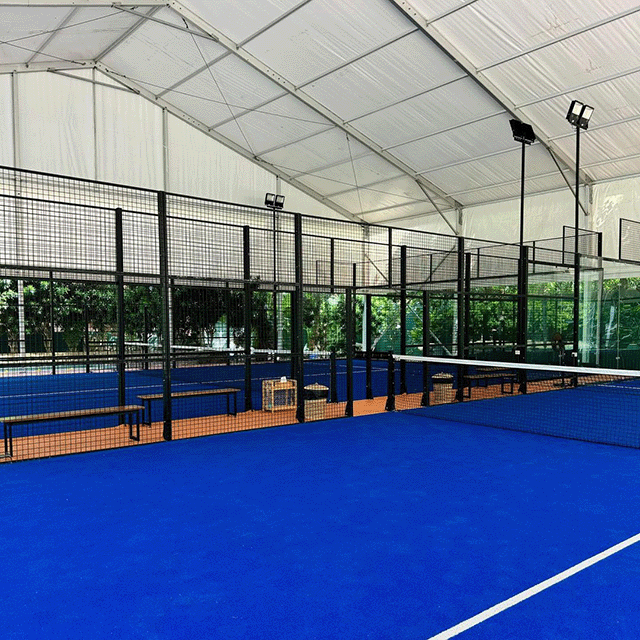
Padel is almost always played in doubles, making teamwork essential. The serve must be underhand and hit below waist level, starting the point by bouncing the ball in the opponent’s service box diagonally. Unlike many other racket sports, you can use the walls during play. The ball must bounce on the opponent’s side before hitting any wall; if it hits a wall first or goes out of bounds, the point ends.
Players can hit the ball directly or after it rebounds off the walls on their side, adding a strategic layer. The ball is allowed only one bounce before being returned. If the ball bounces twice, the point is lost.
Padel courts have enclosed walls, so players can chase balls that bounce off these surfaces, creating longer rallies and exciting play. The game encourages patience, precision, and clever shot placement.
Pickleball can be played as singles or doubles, offering more flexibility. Like padel, the serve is underhand and must be hit below the waist, directed diagonally into the opponent’s service court. However, pickleball has a unique "kitchen" or non-volley zone, a 7-foot area on each side of the net where players cannot volley (hit the ball before it bounces).
This rule prevents aggressive net play and encourages longer rallies. Before volleying, both teams must allow the ball to bounce once on each side after the serve, known as the "double bounce rule." The ball can only bounce once on each side during regular play.
The court is open, so the ball must stay within the boundary lines. If it goes out, the point is lost. Pickleball’s smaller court and non-volley zone make positioning and timing crucial.
Padel uses tennis-like scoring. Points go 15, 30, 40, then game. If both teams reach 40 (deuce), a team must win two consecutive points to claim the game. Matches are usually best of three sets, each set won by taking six games with at least a two-game lead.
Pickleball scoring is simpler. Only the serving team can score points. Games are played to 11 points, but a team must win by at least two points. The score is called out with three numbers: the serving team’s points, the receiving team’s points, and which server is serving (first or second server). For example, "5-3-2" means the serving team leads 5-3 and the second server is serving.
This system keeps pickleball fast-paced and easy to follow, especially for beginners.
Padel is a sport built around teamwork and clever use of the court’s unique features, especially the walls. Players often use the walls to keep the ball in play, creating longer rallies and more dynamic exchanges. Key shots include:
La Chiquita: A soft, low shot that bounces close to the net, forcing opponents to move forward and disrupting their rhythm.
La Bandeja: A controlled smash hit with a slicing motion, designed to slow the ball’s bounce and maintain court position.
Wall rebounds: Players skillfully hit the ball off side or back walls, using angles to surprise opponents and create openings.
Padel requires quick reflexes, good positioning, and anticipation. Since it’s usually doubles, communication and coordination between partners are vital. Players often try to control the net area, where they can volley and put pressure on opponents.
Pickleball focuses on fast reflexes, precision, and tactical shot placement. The smaller court and unique "kitchen" (non-volley zone) demand patience and smart play. Common techniques include:
Dink shots: Soft, controlled shots just over the net within the kitchen. These shots force opponents into difficult returns and slow the pace.
Third shot drop: A strategic drop shot played after the serve and return, designed to neutralize aggressive net players.
Quick volleys: Players use rapid, short swings to volley near the net, aiming to end points quickly.
Baseline rallies: Players exchange groundstrokes from the baseline, testing consistency and endurance.
Pickleball players must master positioning to avoid faults in the kitchen and exploit openings on the court. The game rewards patience and well-timed aggression.
Both sports emphasize strategy but differ in approach due to court size, rules, and equipment.
Winning in Padel:
Use the walls creatively to extend rallies and force errors.
Control the net to dominate play and finish points with volleys or smashes.
Mix shot speeds and angles, combining power and finesse.
Communicate constantly with your partner to cover the court effectively.
Winning in Pickleball:
Master the kitchen rules; avoid faults by careful footwork and shot selection.
Employ dink shots to induce mistakes and control the tempo.
Use the third shot drop to transition from defense to offense.
Position yourself to cover the court efficiently, anticipating opponents’ shots.
In both sports, mental toughness, quick decision-making, and adaptability are key. Players who can read opponents’ strategies and adjust their own gameplay tend to succeed.
Padel is more physically demanding than many other racket sports because of its larger court and the nature of play. The court measures 20 by 10 meters, and players must cover this space rapidly, often moving laterally and backward to respond to shots rebounding off the walls. Quick reflexes and agility are essential since the ball can come at unpredictable angles after bouncing on the glass or mesh walls.
Players need good cardiovascular endurance to sustain longer rallies that often last several shots. Explosive power helps for smashes and volleys, while flexibility and balance are crucial for reaching tricky balls near the walls. Since padel is mainly played in doubles, teamwork and communication reduce unnecessary movement but still require constant positioning adjustments.
Overall, padel demands a blend of speed, endurance, and coordination. It’s a high-intensity workout that burns calories and builds athleticism, making it suitable for players seeking a dynamic and engaging sport.
Pickleball is generally less physically taxing than padel due to its smaller court size—13.41 by 6.1 meters—and slower ball speed. The game emphasizes quick reflexes and sharp hand-eye coordination over extensive running. Because the court is smaller, players focus on short bursts of movement rather than covering large distances.
The non-volley zone, or "kitchen," forces players to use controlled, precise shots rather than power, which reduces strain. The underhand serve and slower ball keep the pace moderate, making pickleball accessible for all ages and fitness levels. It’s particularly popular among older adults or those seeking low-impact exercise.
While pickleball still requires agility and balance, its physical demands lean more toward quick lateral movements, short sprints, and strategic positioning rather than endurance or explosive power.
When comparing the two, padel requires greater overall athleticism. Players cover more ground, react faster to unpredictable ball trajectories, and engage in longer rallies. The use of walls adds complexity, demanding spatial awareness and agility.
Pickleball, by contrast, prioritizes precision, timing, and quick reflexes on a compact court. Its lower impact makes it ideal for beginners, seniors, or those recovering from injuries. However, competitive pickleball at high levels can still be quite fast and demanding.
In summary:
Padel: Higher cardiovascular and muscular demands, suited for players seeking intense physical activity.
Pickleball: More accessible, lower impact, suitable for casual play and all ages but can be competitive and fast-paced.
Choosing between the two often depends on fitness level, age, and personal preference for intensity.
Tip: When planning facilities, consider offering padel courts for players seeking high-intensity workouts and pickleball courts for inclusive, low-impact play appealing to a broader demographic.
Padel has grown rapidly, especially in Europe and Latin America. Spain is the heart of padel, hosting millions of players and numerous clubs. Argentina and Mexico also have large player bases. The sport’s social and doubles-focused nature appeals to many, creating a vibrant community atmosphere. Padel’s enclosed courts and exciting rallies attract players looking for a mix of tennis and squash.
In recent years, padel’s popularity has expanded to the UK, France, Italy, and the Middle East. Investments in professional tours and televised events boost its visibility. The International Padel Federation and Premier Padel tour have helped professionalize the sport, drawing top athletes and sponsors. This growth is expected to continue as more countries build courts and introduce padel in schools and clubs.
Pickleball is the fastest-growing sport in the United States, with over 36 million players reported in 2022. Its accessibility and low-impact nature make it popular among all ages, especially older adults. The sport’s social aspect and simple rules encourage community play. Pickleball courts are easy to set up, often adapting existing tennis or badminton courts, which fuels rapid adoption.
Beyond the U.S., pickleball is gaining traction in Canada, Australia, and parts of Europe and Asia. Organized tournaments and professional leagues, such as Major League Pickleball, help raise its profile. The sport’s growth is supported by national and international governing bodies working to standardize rules and promote pickleball globally.
Both sports show strong upward trends but differ in growth drivers. Padel’s growth depends on building specialized enclosed courts, which require more investment but offer a unique playing experience. Its appeal lies in dynamic rallies and teamwork, attracting players seeking competitive and social play.
Pickleball’s growth is driven by ease of access and inclusivity. Its smaller court and simpler setup make it ideal for schools, community centers, and retirement communities. The sport’s expanding tournament scene and media coverage will likely continue to draw new players.
Looking ahead, padel may expand more internationally as investments increase, especially in Europe and the Middle East. Pickleball could see broader global adoption due to its adaptability and appeal to diverse age groups. Both sports are carving out distinct niches in the racket sport market and offer promising opportunities for facilities, coaches, and equipment suppliers.
Tip: For sports facility planners, investing in pickleball courts offers quick returns due to low setup costs and broad appeal, while padel courts attract dedicated players seeking a premium, strategic game experience.
Padel and pickleball differ in court size, enclosure, and gameplay style. Padel offers a dynamic, strategic experience with enclosed walls, while pickleball emphasizes quick reflexes on an open court. Padel suits those seeking intense, teamwork-oriented play, whereas pickleball appeals to players desiring accessible, low-impact exercise. Both sports are growing rapidly, with distinct advantages. Yaho New Sports Co., Ltd. provides specialized equipment for both sports, ensuring players receive high-quality gear that enhances their game and enjoyment.
A: A padel court is larger, enclosed with glass and mesh walls, allowing wall rebounds, while a pickleball court is smaller, open, and without walls.
A: An outdoor panoramic padel court offers an unobstructed view, enhancing the playing experience with natural surroundings and increased spectator visibility.
A: A flexible portable panoramic padel court is ideal for temporary setups, offering versatility and easy relocation without permanent installation.

