
English
English
Views: 0 Author: Site Editor Publish Time: 2025-10-13 Origin: Site


Have you ever wondered what a padel court is used for? Padel, a sport blending tennis and squash, is gaining popularity worldwide. The unique design of padel courts, including outdoor panoramic settings and private villa installations, plays a crucial role in the sport's dynamics. In this post, you'll learn about the purpose and features of padel courts and their impact on the game.
A padel court is a specially designed playing area for the sport of padel, combining elements from tennis and squash. It features unique characteristics that set it apart from other sports courts. Smaller than a tennis court and enclosed by walls, the padel court creates a dynamic playing environment. The walls are used strategically during the game, allowing for fast-paced, tactical play that emphasizes teamwork and skill.
While padel shares similarities with tennis and squash, its court has several distinguishing features:
Size: A padel court measures 20 meters long and 10 meters wide, about one-quarter the size of a tennis court.
Walls: Padel courts are fully enclosed with walls made of glass, steel, or metal mesh. These walls are an integral part of the game, as the ball can bounce off them.
Surface: Padel courts typically feature artificial grass, which impacts ball speed and player movement.
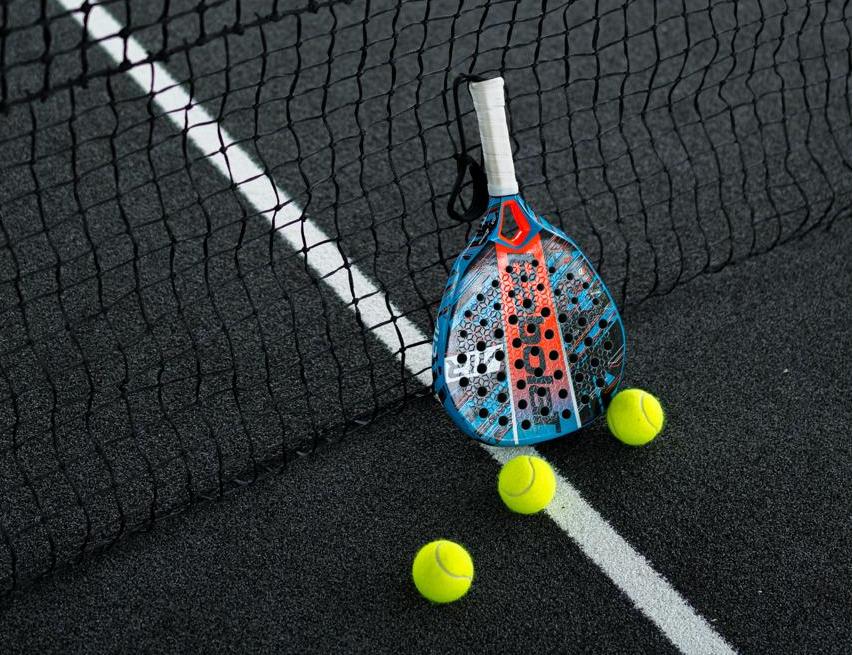
Net: The net divides the court into two halves, similar to tennis, but it’s slightly lower at the center and higher at the sides.
In contrast to squash courts, which are smaller and fully enclosed, padel courts offer a larger space and use an open net, combining features from both tennis and squash.
Padel courts have walls that define the playing space and are essential to the gameplay. The back walls are typically 3 to 4 meters high, while the side walls are around 3 meters. These walls are often made of tempered glass for optimal visibility and durability, allowing players to bounce the ball off them strategically.
Padel courts use various surfaces, each influencing ball behavior and player movement:
Artificial Grass: This is the most common surface, especially outdoors. It mimics natural grass but requires less maintenance. The surface offers good traction and moderate ball bounce, making rallies longer and more strategic. It’s comfortable on players’ joints and suitable for all skill levels.
Steel Structure: Some indoor padel courts use steel structure flooring. This surface is durable, smooth, and ideal for high-level competitive play. While it offers quicker gameplay, it can be harder on the joints compared to artificial grass.
The court has clearly marked lines for service boxes, side boundaries, and back boundaries. These markings guide the rules of the game and help players during serves and rallies.
Padel courts have gates on either side near the net to allow players to exit and re-enter during the game. This feature is unique to padel courts.
The net on a padel court is 10 meters long. The height of the net is 88 cm at the center and 92 cm at the edges.
These features collectively create a dynamic playing field that encourages strategic use of space and walls, making padel a unique and engaging sport.
A padel court measures 20 meters long and 10 meters wide. It is a rectangle divided into two equal halves by a net stretching 10 meters across. The net height is about 88 cm at the center and 92 cm at the edges. The court is about one-quarter the size of a standard tennis court, making it more compact and suited for fast-paced doubles play.
The back walls stand 4 meters high, while the side walls reach 3 meters. These walls are an essential part of the court, influencing gameplay by allowing the ball to bounce off them. The court lines mark the service boxes, side boundaries, and back boundaries, guiding players during serves and rallies.
Padel court walls are typically made from a combination of tempered glass and metal mesh. The back walls are often made entirely of tempered glass to provide better visibility and consistent ball bounce. The side walls may combine glass and metal mesh to balance cost and functionality.
The flooring material varies depending on whether the court is indoors or outdoors. Common materials include:
Artificial Grass: Used outdoors, this surface offers good traction and provides a comfortable, joint-friendly surface.
Steel Structure: Used for some indoor courts, offering a durable surface that maintains consistent ball speed and is ideal for competitive play.
A well-designed padel court ensures a safe, enjoyable, and competitive environment. The dimensions must meet official standards to maintain the integrity of the sport. Proper wall height and material choice impact the ball's rebound and game dynamics, while flooring affects player comfort and safety.
Padel courts come in two main types: indoor and outdoor.
Indoor Courts: These courts are fully enclosed, often found in sports halls or dedicated buildings. Indoor courts offer shelter from weather, allowing year-round play regardless of rain, wind, or extreme temperatures. Strong lighting is essential indoors to ensure visibility.
Outdoor Courts: Outdoor courts are exposed to natural elements. They are popular in areas with mild climates and are commonly found in sports clubs, resorts, or public parks. While outdoor courts rely on daylight, many are equipped with floodlights for evening play. Weather conditions can affect gameplay and court maintenance.
Choosing between indoor and outdoor courts depends on factors like climate, budget, and intended usage. Indoor courts are more expensive to build and maintain, while outdoor courts are more economical but require more upkeep.
This surface is the most commonly used, particularly for outdoor courts. Artificial grass mimics natural grass but requires much less maintenance. It provides excellent traction and moderate ball bounce, which makes rallies longer and more strategic. It’s easy on the joints, making it suitable for all skill levels.
This surface is used in some indoor courts and is designed for competitive play. It provides a firm, smooth surface that leads to faster ball speeds. Steel structures are durable and require minimal maintenance, but they are harder on the joints compared to artificial grass.
Walls are a defining feature of padel courts, allowing players to use them for both offensive and defensive strategies. Unlike tennis, where hitting the wall results in the ball being out, padel lets the ball bounce off the walls. This dynamic creates new opportunities for strategic play.
Mastering wall use is essential to becoming a skilled padel player. Here are some common strategies:
Defensive Rebounds: Players can let the ball bounce off the back or side walls to buy time and reposition themselves.
Wall Shots: Intentionally hitting the ball against the walls can force opponents to adjust to unusual angles.
Passing Shots: Using the walls to send the ball around an opponent at the net can create openings for points.
Lobs and Wall Bounces: Combining lobs with wall rebounds helps reset rallies or catch opponents off guard.
Walls add a unique element to the game, making padel more strategic and enjoyable.
Designing a padel court requires careful planning. The court size must adhere to official measurements—20 meters long and 10 meters wide. The walls must be the right height (back walls around 4 meters and side walls around 3 meters) to ensure proper gameplay dynamics. Additionally, player safety and comfort are essential, requiring durable materials for the flooring and good traction to prevent slips.
Proper lighting is vital, especially for indoor courts or outdoor courts used during the evening. Lighting should be bright, evenly distributed, and free of glare or shadows. LED lights are ideal for their energy efficiency and ability to provide clear illumination.
Material selection impacts both play quality and maintenance. Tempered glass is the most common material for walls, offering excellent visibility and consistent ball bounce. Steel structures and artificial grass are common choices for flooring, depending on whether the court is indoors or outdoors.
Padel courts are commonly found in sports complexes and clubs. These venues typically cater to both amateur and professional players, offering courts designed to official standards.
Many hotels and resorts now feature padel courts as part of their sports amenities. These courts are often outdoors, with scenic views and artificial grass surfaces.
Private villas and residential communities are also increasingly installing padel courts for homeowners who enjoy the sport. These courts offer privacy and convenience, helping to foster a community atmosphere in residential areas.
Padel courts, with their unique design and dynamic gameplay, are quickly gaining popularity worldwide. Whether in sports complexes, resorts, or private villas, padel courts offer an exciting and accessible sport for all skill levels. Yaho New Sports Co., Ltd. offers premium padel court solutions, ensuring durability and enhancing the sport's enjoyment globally.
A: A padel court is used for playing the sport of padel, which combines elements of tennis and squash in a fast-paced, strategic environment.
A: An outdoor panoramic padel court features glass walls that enhance visibility and spectator experience, often found in scenic locations like private villas.
A: Padel courts are popular in private villas because they offer convenience, privacy, and an engaging way to stay active at home.

