English
English
Views: 0 Author: Site Editor Publish Time: 2026-08-28 Origin: Site
The visible fibers receive most of the attention when buyers compare padel turf, but the backing helps hold those fibers in position and keeps the rolls dimensionally stable. Latex and polyurethane, commonly shortened to PU, are two coating options used in artificial turf construction. Neither should be judged by material name alone. Climate, drainage, installation method, backing weight, primary fabric and coating quality all influence how the finished surface performs.
Artificial turf normally has a primary woven layer through which the fibers are tufted. A secondary coating is then applied to help secure the tufts and stabilize the sheet. The complete backing influences roll handling, seam alignment, drainage and resistance to expansion or contraction.
It does not determine padel performance by itself. Ball response and player movement also depend on fiber type, pile height, density, yarn shape, sand infill, base flatness and maintenance. Buyers should therefore evaluate the backing as one part of the complete padel turf system.
Comparison Area | Latex Backing | PU Backing |
|---|---|---|
General character | Flexible and widely used | Often selected for lower moisture uptake and dimensional control |
Moisture response | Depends strongly on formulation and curing | Generally absorbs less water than conventional latex coatings |
Temperature changes | Performance varies with coating quality | Can provide useful stability across changing conditions |
Installation | Familiar to many artificial turf installers | Requires compatible seam materials and procedures |
Selection basis | Budget, flexibility and proven specification | Moisture exposure, stability and project specification |
These are general tendencies, not automatic performance guarantees. A well-formulated latex backing may outperform a poorly applied PU coating. Coating thickness, adhesion, curing and the strength of the primary fabric all matter.
Turf rolls should remain aligned after installation. Excessive expansion or contraction can open seams, create wrinkles or disturb court markings. PU is often selected when moisture and temperature variation make dimensional control a priority.
The secondary coating helps hold the fibers in the primary backing. However, buyers should request relevant product information rather than assuming that one coating name guarantees stronger tuft retention.
PU is sometimes described as more water resistant, but water resistance and drainage are not the same. Drainage depends on perforations, coating layout, seam construction and the permeability and slope of the base.
The guide to padel turf installation explains why a permeable backing must work with a correctly prepared base. Even a well-draining turf can develop standing water when the substrate is uneven or the outlets are blocked.
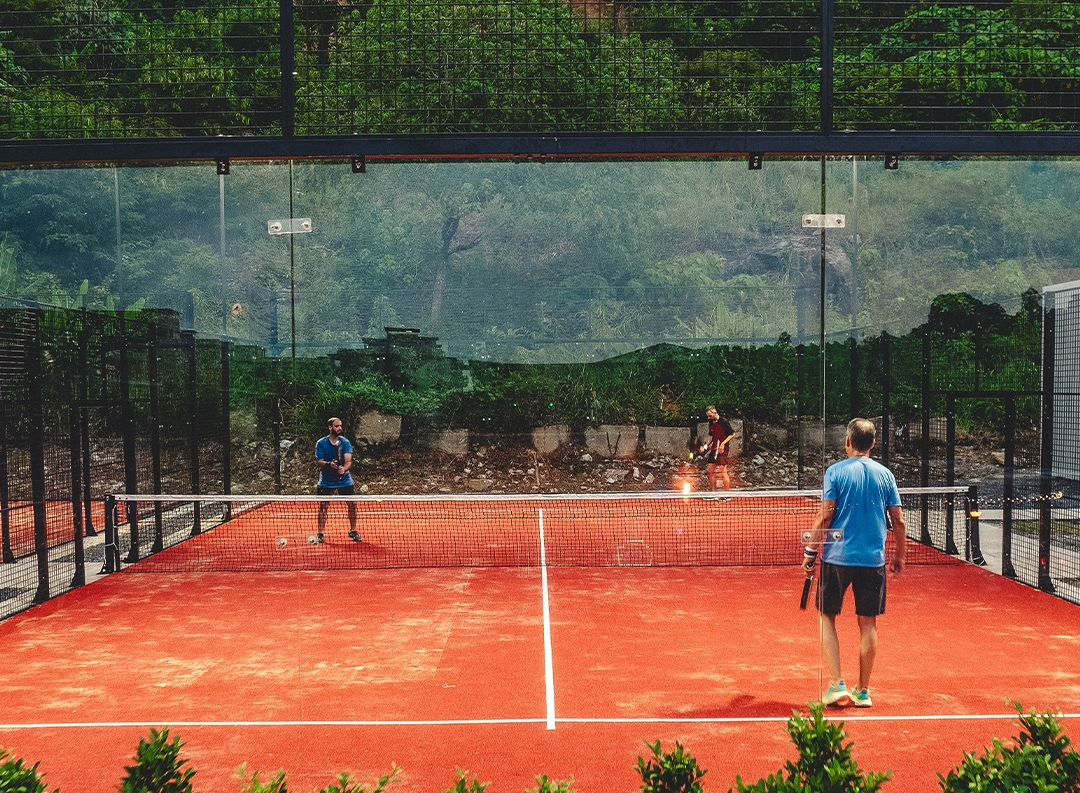
PU backing can be a practical choice for outdoor courts exposed to moisture, temperature changes and frequent use. YAHO’s YHO-004 PU-backed orange turf combines 100% PE monofilament fibers with a PP and PU backing structure.
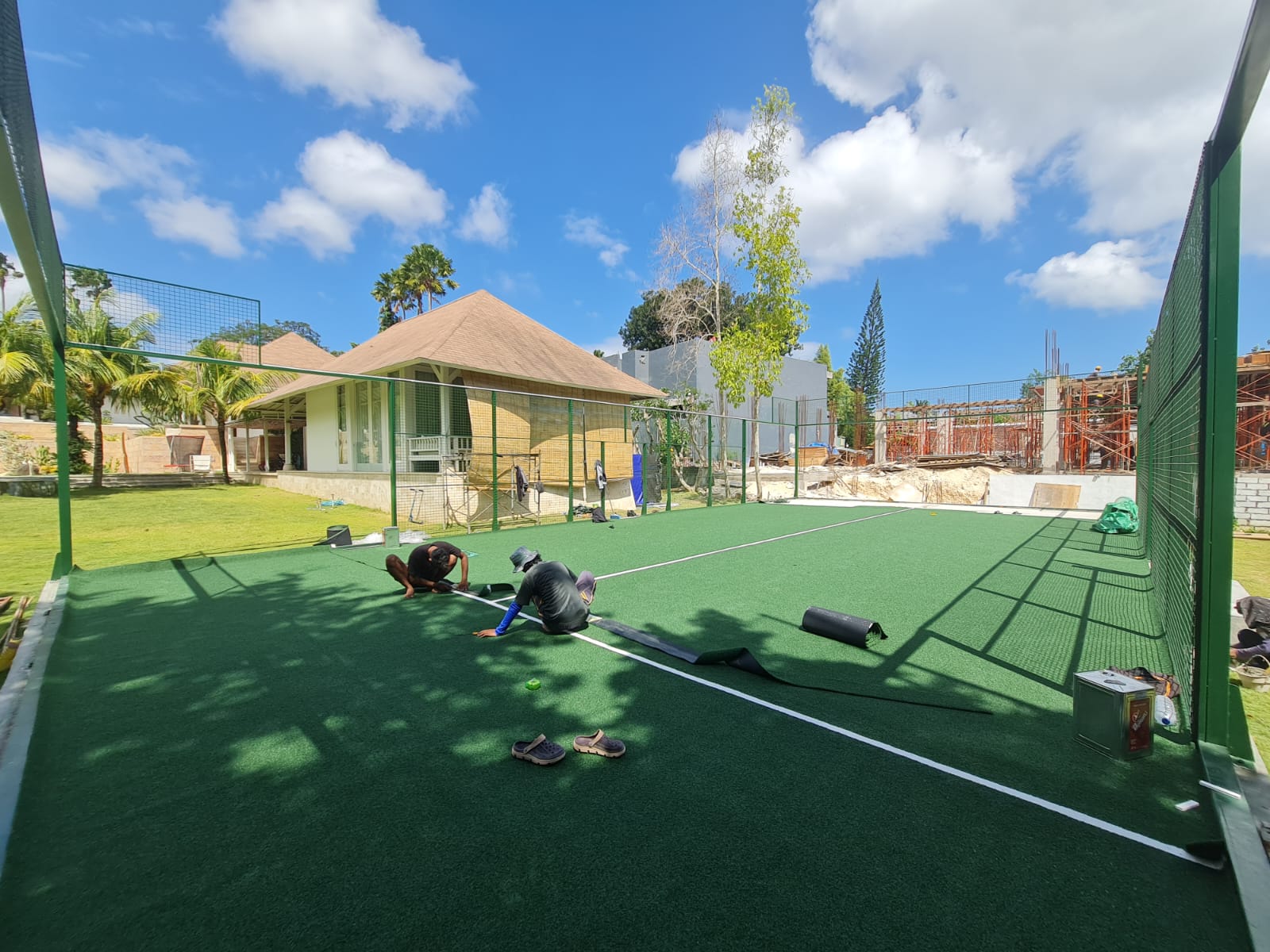
The YHG-004 green turf uses a double PP and PU backing with 100% PE monofilament fibers, a 12 mm pile height and a density of 50,400 stitches per square meter.
These constructions show how PU can be combined with woven PP layers. They do not mean PU is required for every project. A buyer comparing latex and PU should consider the exact climate, installation method and verified product specification.
PU-backed turf and PU seam adhesive are different parts of the installation. The backing is manufactured onto the turf roll. Adhesive is applied on site to connect turf sections to seaming tape or the prepared surface.
A PU backing does not remove the need for compatible adhesive, accurate trimming and proper curing. Likewise, using PU adhesive does not convert latex-backed turf into a PU-backed product. Buyers should confirm compatibility between the backing, seam tape and adhesive before installation.
Ask for the complete backing construction, not only “latex” or “PU.”
Confirm whether drainage holes or permeable areas are included.
Evaluate moisture, temperature and UV exposure at the project site.
Check roll dimensions, seam layout and installation instructions.
Request information about dimensional stability and tuft retention.
Confirm adhesive and seam-tape compatibility.
Compare backing with fiber type, pile height, density and infill requirements.
A wider padel turf selection guide can help buyers evaluate the backing alongside playing characteristics and maintenance requirements.
Latex and PU backing can both be used in artificial turf, but their suitability depends on formulation, construction and project conditions. PU is often attractive where low moisture uptake and dimensional stability are priorities, while latex may remain practical when a proven specification matches the environment and installation method. Yaho New Sports currently offers several monofilament padel turf products using PP and PU backing structures. Buyers should still compare the complete turf system rather than selecting from the coating name alone.
No. PU may offer advantages in moisture response and stability, but coating quality and the complete turf construction determine actual performance.
It can reduce water absorption, but padel turf still needs designed drainage through the backing, seams and base.
It may be suitable when its formulation, drainage and dimensional performance are verified for the local outdoor environment.
It can influence surface stability, but ball bounce is also affected by fibers, density, pile height, infill and base flatness.
The quotation should identify the primary backing layers, secondary coating, drainage design and any installation or adhesive requirements.