English
English
Views: 0 Author: Site Editor Publish Time: 2026-08-26 Origin: Site
UV resistance describes a turf system’s ability to slow deterioration caused by sunlight. It does not mean that outdoor padel turf will never fade, weaken or age. Fiber polymer, UV stabilizers, pigment quality, climate, surface temperature and exposure time all influence long-term performance. For clubs and project buyers, the useful question is not whether a product carries a “UV-resistant” label, but what that claim covers and whether the supporting information matches the installation environment.
UV-resistant padel turf is formulated to retain color and fiber performance for longer under sunlight than an unstabilized surface. Buyers should still evaluate local solar exposure, heat, fiber construction, backing, drainage and maintenance. A general UV statement without a test condition, evaluation method or application context is not enough for a serious outdoor project.
Ultraviolet radiation can gradually affect the molecular structure of synthetic fibers. The first visible sign may be color change, but fading is not the only concern. Long exposure can also contribute to brittleness, reduced resilience and faster fiber breakage.
Heat intensifies the operating environment. Dark turf, surrounding glass and limited airflow can increase surface temperature. Moisture, cleaning chemicals, sand movement and frequent play add other forms of stress, so deterioration should not be attributed to UV exposure alone.
The existing guide to outdoor turf fading explains how appearance changes can develop. For a new specification, buyers should go one step further and determine what UV protection has been built into the selected yarn and pigment system.
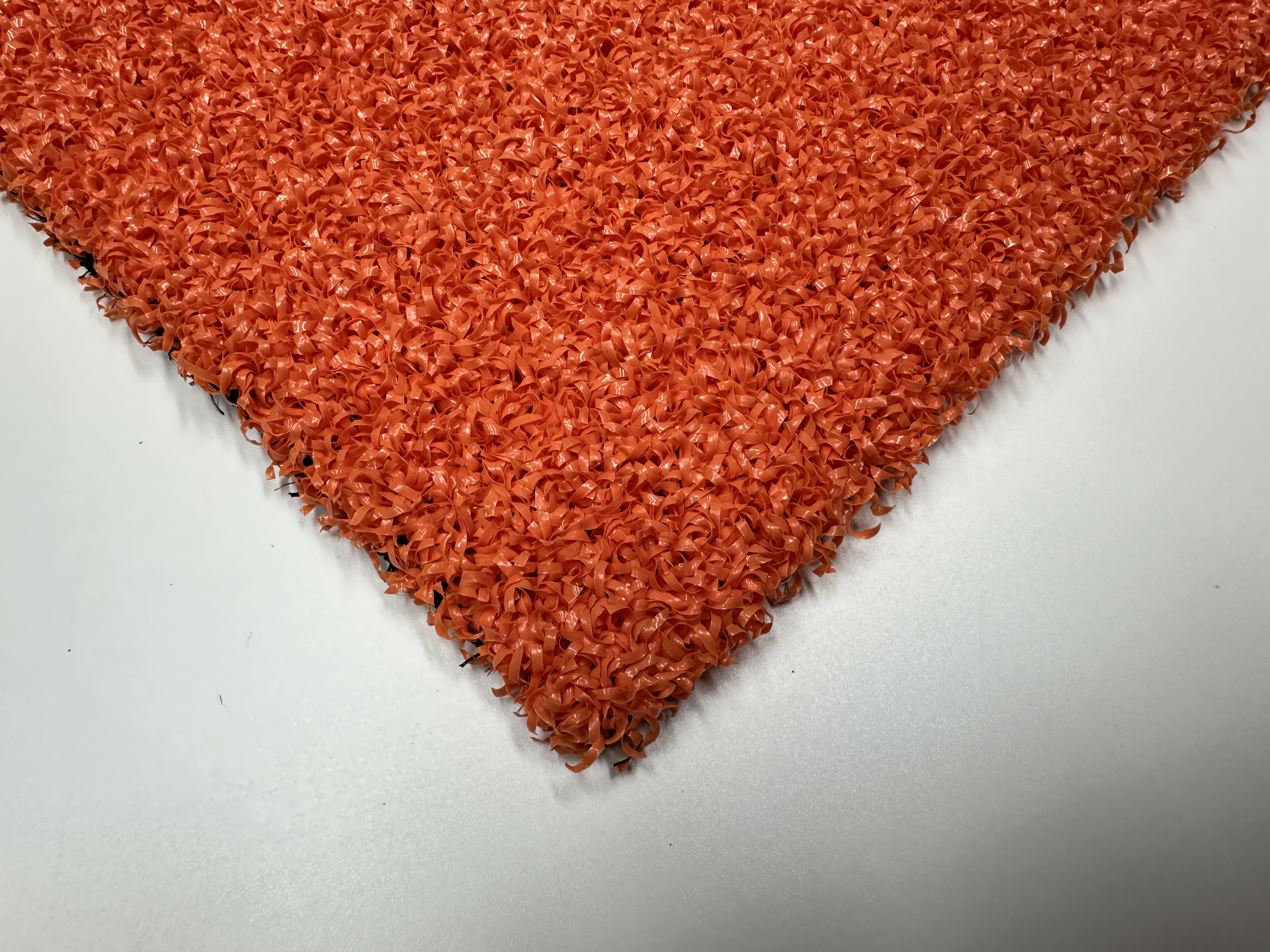
UV stabilizers and suitable pigments can slow visible color change. This is especially relevant for blue, green, red or orange club surfaces where appearance forms part of the venue’s identity. Color retention should be assessed separately from mechanical durability.
A turf may retain an acceptable color while its fibers become less flexible. Buyers should therefore avoid judging outdoor performance from photographs alone. Fiber splitting, matting, breakage and recovery after foot traffic are also relevant.
UV resistance in the yarn does not automatically protect every component of the turf. The backing, coating, seam system and line markings must also suit outdoor exposure. Temperature changes and moisture can affect dimensional stability even when the visible fibers remain in good condition.
YAHO’s YHO-004 UV-resistant padel turf uses 100% PE monofilament fibers, a 12 mm pile height, 10,000 Dtex yarn and a density of 50,400 stitches per square meter. These values describe its construction, but none should be used alone to predict service life.
Specification Area | Why It Matters | What to Confirm |
|---|---|---|
Fiber material | Affects resilience, feel and weather response | Polymer type and yarn construction |
UV stabilization | Helps slow sunlight-related degradation | Test conditions and evaluated property |
Pigment system | Influences color retention | Color-specific outdoor suitability |
Density and Dtex | Affect surface structure and durability | How the values match the intended play level |
Backing | Supports dimensional stability and drainage | Backing layers, coating and drainage design |
YAHO’s broader outdoor padel turf range includes monofilament surfaces in several colors and specifications. Selection should consider the complete system rather than treating color or UV wording as the deciding factor.
A useful UV claim should explain what was tested. Buyers can ask for the test method, exposure duration, evaluated color change and any measurement of retained fiber performance. The supplier should also clarify whether the result applies to the exact color and yarn being quoted.
Commercial buyers should avoid relying on statements such as “will never fade.” All outdoor polymers age. A credible specification defines resistance under stated conditions without promising permanent appearance.
Warranty terms should also be read carefully. Color change, fiber wear, installation problems, improper maintenance and damage from unusual environmental conditions may be treated differently.
A mild coastal climate, a dry high-UV location and a hot enclosed court do not expose turf to the same conditions. Project location should therefore be included in the inquiry.
Drainage and base preparation matter because standing water, contamination and weak seams can shorten surface life independently of sunlight. Infill level and brushing also affect how the fibers remain supported during repeated play.
The article on padel turf selection factors can support the wider assessment of density, fiber structure and application. A high-density monofilament turf may suit heavily used facilities, but density still needs to be considered with pile height, yarn, infill and maintenance.
UV resistance helps outdoor padel turf retain its appearance and fiber performance under sunlight, but it is not a guarantee against all fading or wear. Buyers should compare the exact yarn, color, stabilization evidence, backing, climate suitability and installation requirements. Yaho New Sports offers PE monofilament padel turf in several specifications, allowing project discussions to consider both visual requirements and the actual outdoor environment.
No. UV stabilization slows degradation, but sunlight, heat, wear, moisture and maintenance still affect long-term appearance.
No. A surface can retain its color while losing fiber flexibility, or show some fading while remaining mechanically usable.
Not necessarily. Performance depends on pigment quality, stabilization and fiber formulation rather than color darkness alone.
It should identify the test method, exposure conditions, duration, specimen and evaluated property, such as color change or retained strength.
A canopy can reduce direct exposure, but reflected and indirect sunlight may still reach the surface. Outdoor-grade turf remains necessary.